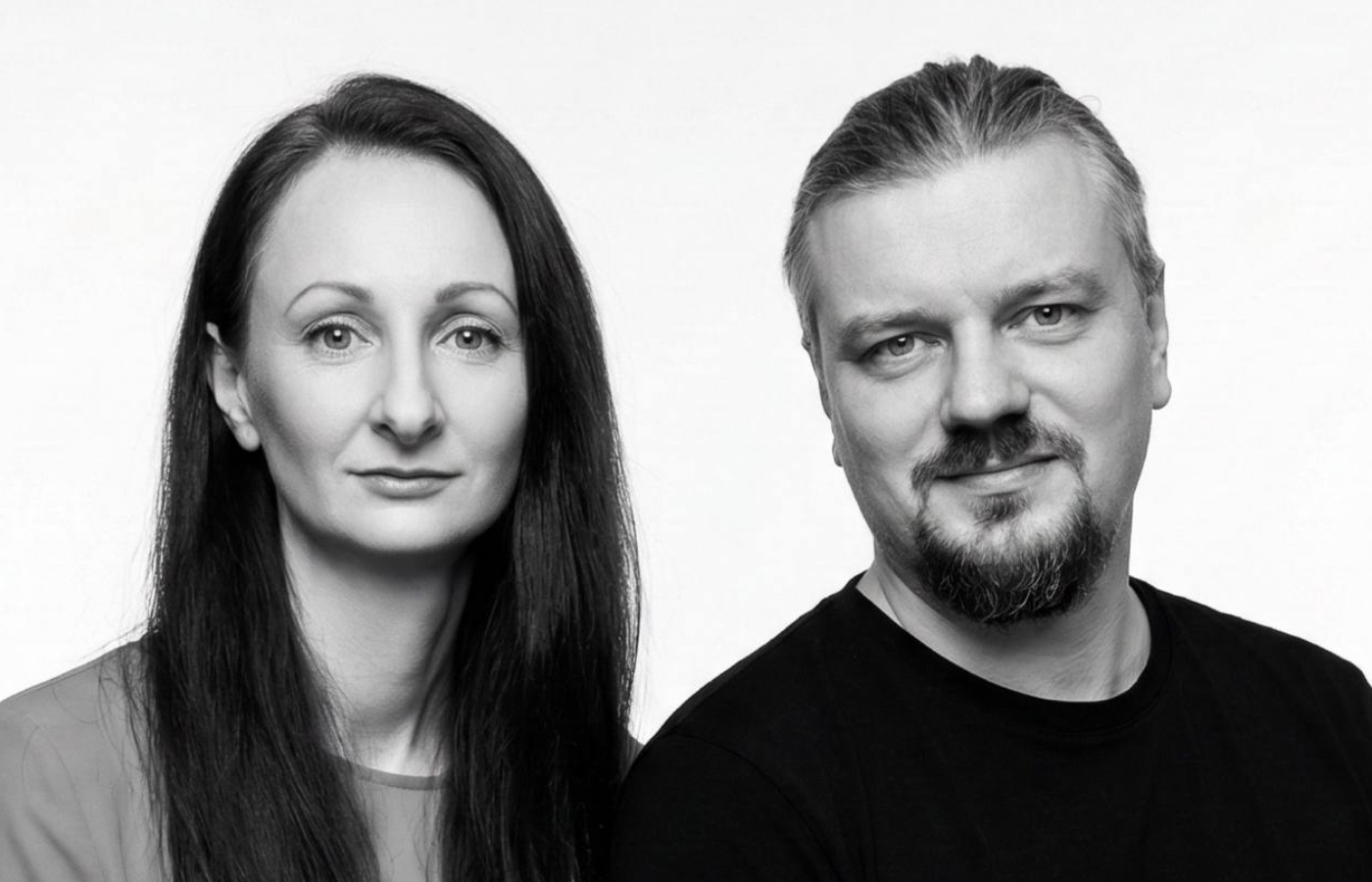
Interdisciplinary Artists — Moscow
Art Duet WM
Ignat and Tanya Matveev are a Moscow-based artist duo working across performance, video art, interactive installation, and AI-mediated practice. They pursue an itinerant mode of working — continually relocating in search of new perceptual conditions — and collaborate under the name ART DUET WM since 2017.
Their interdisciplinary approach dissolves the boundaries between artistic disciplines, uniting performance, video, sound, photography, and machine intelligence within a single, coherent inquiry. Central to their practice is the conviction that art must remain radically accessible and genuinely participatory — an open space in which the audience becomes a co-author.
The duo consistently works with contemporary AI technologies as creative partners rather than mere tools: generative image models, neural networks, and algorithmic processes are woven into the fabric of each project, producing hybrid objects that belong simultaneously to the computational and the embodied.
We investigate the point of transformation — the zone in which the digital and the material interpenetrate and a new, hybrid reality emerges. Our primary concern is the technological trace: the imprint that computation leaves upon human experience, corporeality, and perception. We orient ourselves toward moments of transition, distortion, and irreversible change.
Our goal is to locate a new mode of relation between human beings, machines, and environments — one that produces a perceptual shift and a total re-examination of the world. We offer no answers. We pose questions.
Our methodology is grounded in the deliberate conjunction of the irreconcilable. We employ what we term the method of double optics: a practice of constructing connections between errors — glitches in code, digital-noise artefacts, tactile interference. Within this system, the failure becomes the endpoint and the new statement. We use the error as language, and the connection between errors as grammar.
Simultaneous perception from two irreconcilable vantage points — the biological and the computational — generating a third, irreducible gaze.
The error is not noise to be suppressed but a carrier of meaning. Code failures, digital artefacts, and tactile interference become the primary expressive vocabulary.
Each work creates an open field in which the viewer's presence and decision-making become constitutive elements of the piece itself.
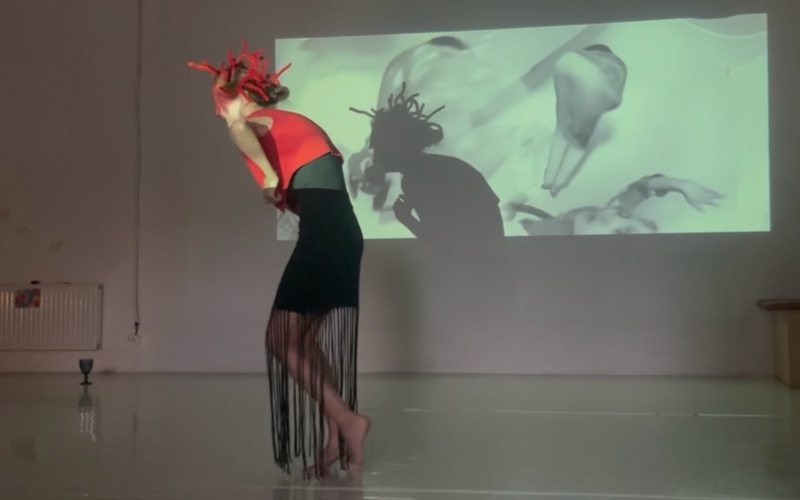
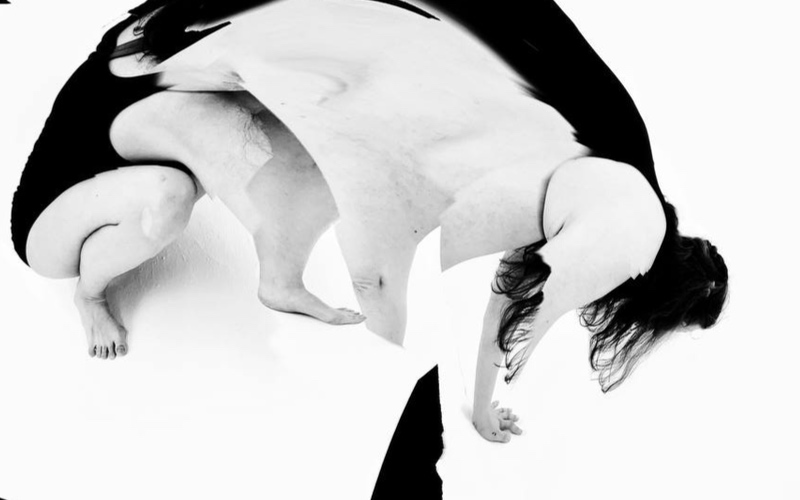
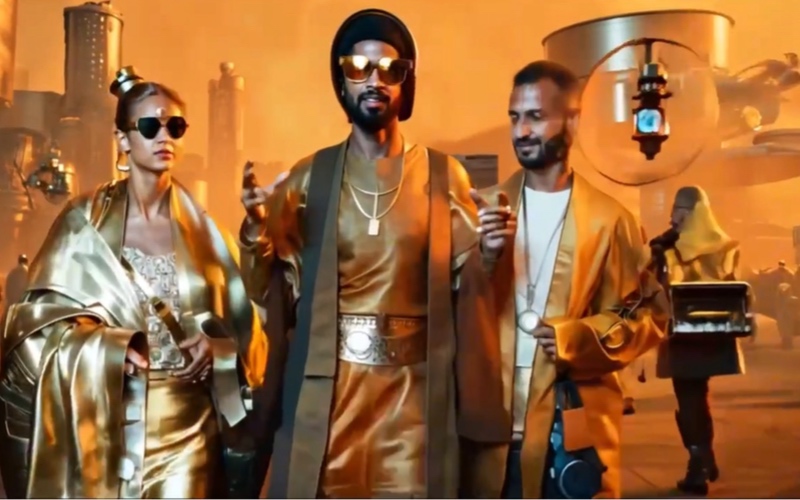
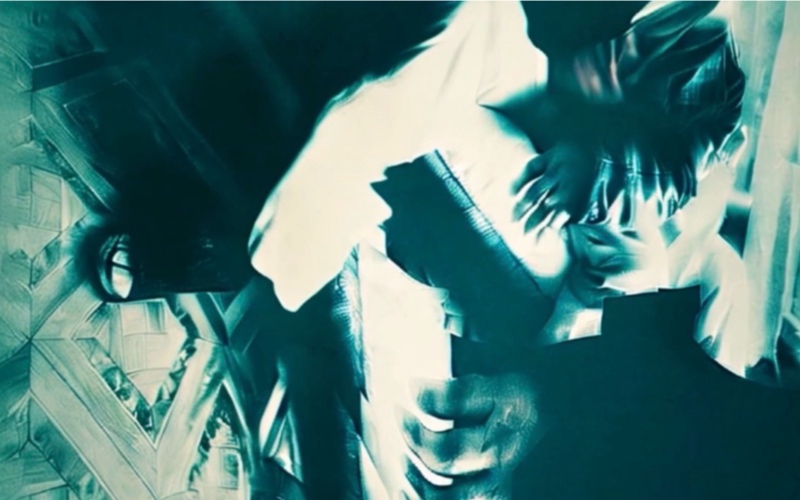
The work takes as its structural core a dance object — a space designed for movement practice — and, through a series of metamorphoses, produces a performance that traverses the boundary between balance and chaos. This space is held in suspension between the corporeal and the mental, between the moment of "here and now" and that which cannot be retained: the fugitive experience of equilibrium.
The question posed in the title seeks no resolution; instead, it opens onto a meditation on the nature of memory, perception, and time. Here, the body becomes a mediator between the internal and the external, between personal intuition and collective archetype.
Through video art, the artists construct an environment in which habitual reality is refracted through a metaphysical lens. Time and space distort and multiply, as in a kaleidoscope; the image is perceived from a first-person vantage point, and sound becomes the interior dialogue of the artist and the world. The work's documentary register is inflected by surrealism — an invitation to travel between worlds alongside its protagonists, in the spirit of Tarkovsky's Mirror or Andrei Rublev.
This video work brings together Japanese Butoh dance — with its emphasis not on form but on modalities of movement, and its aspiration toward detachment from the social dimension of selfhood — with the legacy of German Expressionist dance, and with abstract imagery generated by a neural network. The dancer's embodied interiority is rendered with unflinching precision; her expressivity is unfeigned.
The chrysanthemum of the title is not incidental. This flower has long been associated with the passage between life and death, light and shadow; it becomes, here, a metaphor for the collective human journey — a path saturated with contradiction. The synthesis of virtual and real proposes an alternative perspective on a world undergoing global digitalisation, one that does not refuse that process but opens within it new horizons of meaning.
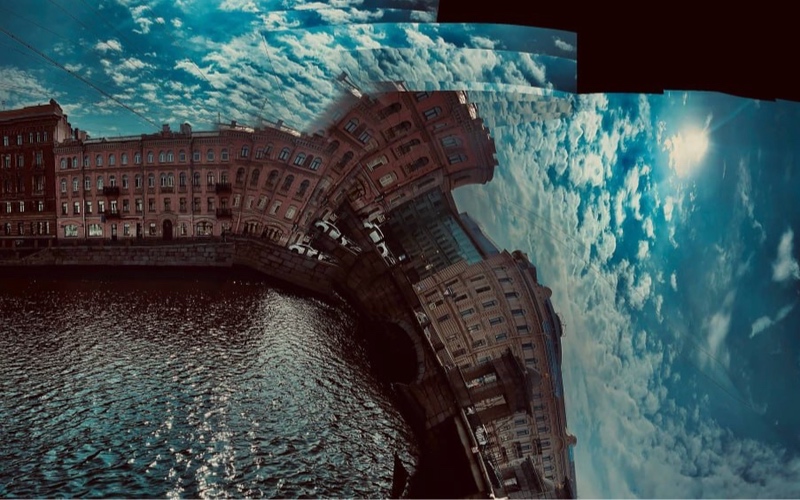
A parsec is a unit of astronomical distance. Borrowed from the language of cosmology, the title is transformed here into a metaphor for fracture within habitual linearity — a gaze through the gap between worlds, in which a single frame becomes a portal and light a conductor. The project is constituted by interlaced photographs, each made on a smartphone: a manifesto on how a single image can sever a history that does not belong to any timeline.
The work engages the concept of postmemory — the inherited, mediated relation to events not directly experienced. The smartphone, that most quotidian of instruments, becomes a window onto other states of being. Each photograph is not a fixation but a testimony to displacement: the border between city and body, between the present and the familiar, suddenly dissolves, shifts, blurs. Parsec is a visual myth of multiplicity — of entering a city through a reflection in a shop window, of recognising in a face in a crowd someone one has never met.
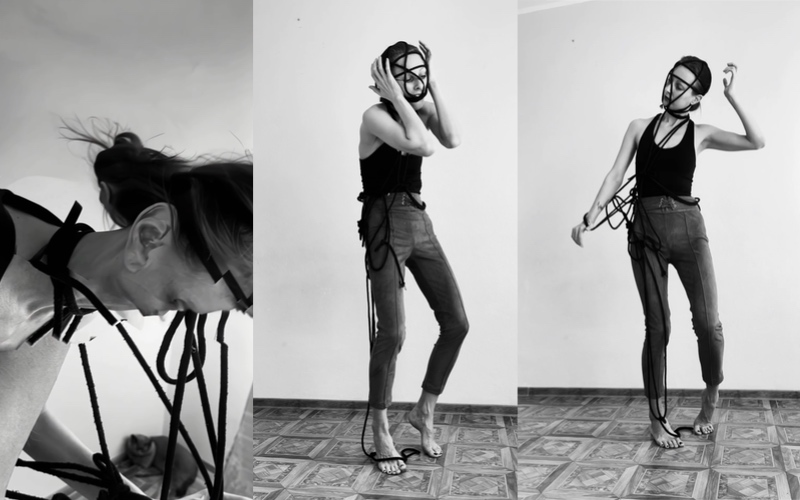
Conversation Through Glass is a series of monochrome photographs in dialogue with video art. Its structure is anatomical: each region of the body narrates its own history, transmitting the emotional life of a singular person. Each curvature becomes a load-bearing element of the work's address, opening onto the viewer a world of narrative held within a corporeal envelope.
The project is not merely a visual statement but an attempt to hear the body as an archive of affect — a mirror reflecting the fugitive flashes of pain, vulnerability, tenderness, and loss. The works are constructed on the dialogue between the corporeal and the metaphysical, between the instant and eternity; in the stillness of gesture, the movement of memory; in the blurred edge of the frame, the fragile threshold between the personal and the universal.
The photographs were made on a smartphone — an index of intimacy. Each frame is a scene upon which the dance of the body is forever inscribed. The sequential arrangement of images establishes an exchange between the body and the figure who stands "behind the glass" — before the framed photograph. This conversation may be quiet, tender, and private; or charged, luminous, and fitful. Each viewer's relation to their own body is singular — and within this work, that relation becomes the subject of inquiry.
An experimental short-film series drawing on the avant-garde opera Victory Over the Sun by Mikhail Matyushin and Alexei Kruchenykh. The artists produce a series fusing absurdism with visual art. Its protagonist, Alice, travels between planets and encounters artists of the Russian avant-garde: rather than reconstructing a utopia, she seeks to create a space in which art functions as the foundation of a new world premised on each person's right to celebration as a form of existence.
The project brings together photography and neural networks, raising questions about the limits of the perception of reality through surrealist imagery and sonic experiment. The artists address the heritage of the Russian avant-garde, translating it into the language of the digital age.
Conversation deconstructs the concept of corporeality through binary opposition. The video work is structured as a kaleidoscope, enabling the viewer to move through different spatial registers, balancing between abstraction and concreteness. Office chairs give way to photographs recalling cyanotype, before a point of convergence emerges: Nevsky Prospekt. This is a dialogue between person and city, the city and its space — both exterior and interior.
The sonic score of the project is not dialogue but breath. A deep, pre-verbal conversation of masculine and feminine, expressed not in words but in vibration, noise, and silence. The acoustic materiality of sound enters into resonance with the visual materiality of the image, inviting the viewer to contemplate their own borders and their permeability.